Ahava Hospice

Latest News

Latest News

Healthcare Personnel and First Responders: How to Cope with Stress and Build Resilience During the COVID-19 Pandemic

September 11, 2020

Providing care to others during the COVID-19 pandemic can lead to stress, anxiety, fear, and other strong emotions. How you cope with these emotions can affect your well-being, the care you give to others while doing your job, and the well-being of the people you care about outside of work.

During this pandemic, it is critical that you recognize what stress looks like, take steps to build your resilience and cope with stress, and know where to go if you need help.

Tips to cope and enhance your resilience:

  • Communicate with your coworkers, supervisors, and employees about job stress.
  • Remind yourself that everyone is in an unusual situation with limited resources.
  • Identify and accept those things which you do not have control over.
  • Recognize that you are performing a crucial role in fighting this pandemic and that you are doing the best you can with the resources available.
  • Increase your sense of control by keeping a consistent daily routine when possible — ideally one that is similar to your schedule before the pandemic.
  • When away from work, get exercise when you can. Spend time outdoors either being physically activity or relaxing. Do things you enjoy during non-work hours.
  • Take breaks from watching, reading, or listening to news stories, including social media. Hearing about the pandemic repeatedly can be upsetting and mentally exhausting, especially since you work with people directly affected by the virus.
  • If you feel you may be misusing alcohol or other drugs (including prescriptions), ask for help.
  • Engage in mindfulness techniques such as breathing exercises and meditation.
  • If you are being treated for a mental health condition, continue with your treatment and talk to your provider if you experience new or worsening symptoms.

 Learn more at: https://www.cdc.gov/coronavirus/2019-ncov/hcp/mental-health-healthcare.html?CDC_AA_refVal=https%3A%2F%2Fwww.cdc.gov%2Fcoronavirus%2F2019-ncov%2Fcommunity%2Fmental-health-healthcare.html

What’s the Difference Between COVID-19 and Seasonal Allergies?

September 3, 2020

When choosing to go out in public or visit a loved one at higher risk, the Centers for Disease Control and Prevention (CDC) recommends we pay close attention to our symptoms. For those of us with seasonal allergies, understanding symptoms  can present a challenge!  

Seasonal allergies triggered by airborne pollen can lead to seasonal allergic rhinitis, which affects the nose and sinuses, and seasonal allergic conjunctivitis, which affects the eyes. Your sniffles and sneezes may seem like symptoms of COVID-19.

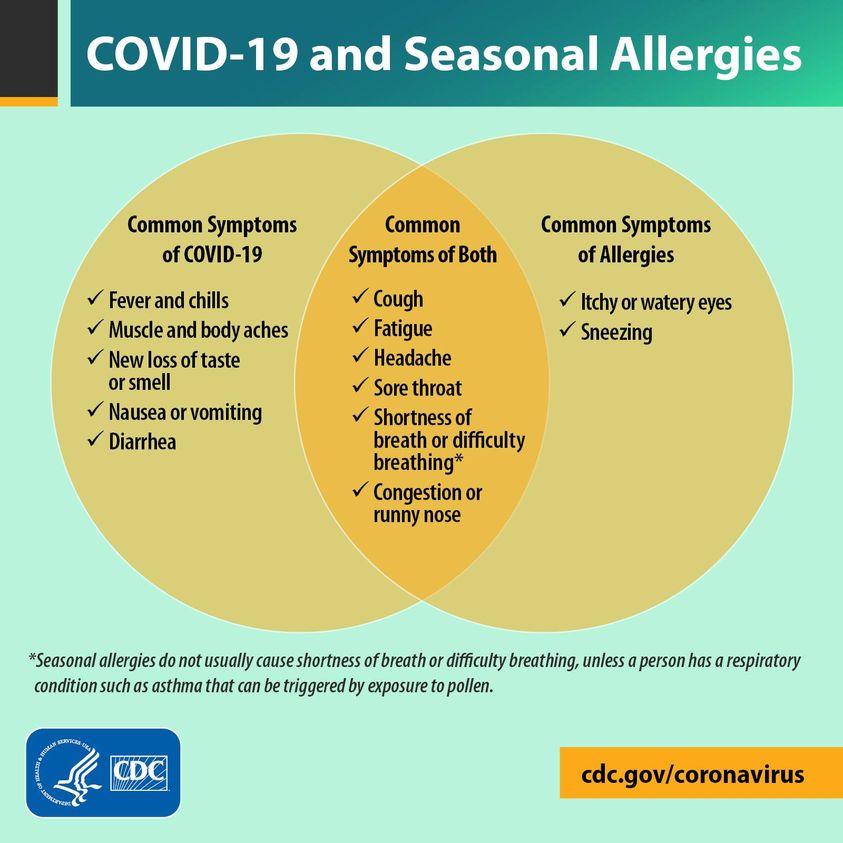
While COVID-19 and seasonal allergies share many symptoms, there are some key differences between the two. 

For example, COVID-19 can cause fever, which is not a common symptom of seasonal allergies. The image below compares symptoms caused by allergies and COVID-19.

*Seasonal allergies do not usually cause shortness of breath or difficulty breathing, unless a person has a respiratory condition such as asthma that can be triggered by exposure to pollen.

This is not a complete list of all possible symptoms of COVID-19 or seasonal allergies. Symptoms vary from person to person and range from mild to severe. You can have symptoms of both COVID-19 and seasonal allergies at the same time.

If you think you have COVID-19, follow CDC’s guidance on ”What to do if you are sick.” If you have an emergency warning sign (including trouble breathing), seek emergency medical care immediately.

How to Safely Wear and Take Off a Mask | Covid-19

August 28, 2020

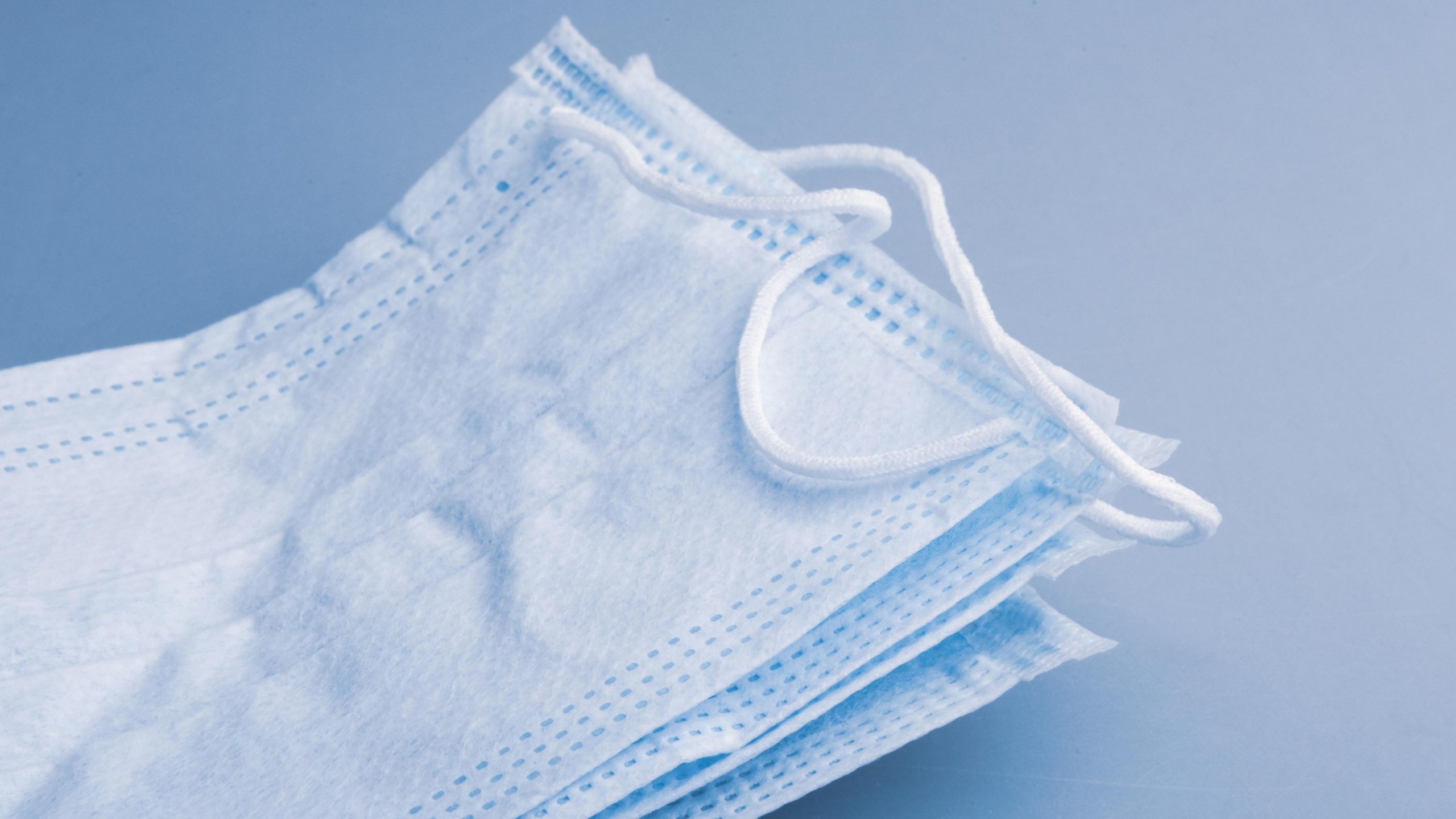
Covid-19 has been found to spread mainly from person to person via respiratory droplets produced when an infected person coughs, sneezes, or talks. The Centers for Disease Control and Prevention recommends wearing face masks to help slow the spread of COVID-19 when combined with every day preventive actions and social distancing in public settings.

Here are some guidelines on how to properly wear and take off a mask.

WEAR YOUR MASK CORRECTLY

  • Wash your hands before putting on your mask
  • Put it over your nose and mouth and secure it under your chin
  • Try to fit it snugly against the sides of your face
  • Make sure you can breathe easily
  • Do not place a mask on a child younger than 2


USE A MASK TO HELP PROTECT OTHERS

  • Wear a mask to help protect others in case you’re infected but don’t have symptoms
  • Keep the mask on your face the entire time you’re in public
  • Don’t put the mask around your neck or up on your forehead
  • Don’t touch the mask, and, if you do, clean your hands


FOLLOW EVERYDAY HEALTH HABITS

  • Stay at least 6 feet away from others
  • Avoid contact with people who are sick
  • Wash your hands often, with soap and water, for at least
  • 20 seconds each time
  • Use hand sanitizer if soap and water are not available


TAKE OFF YOUR MASK CAREFULLY WHEN YOU’RE HOME

  • Untie the strings behind your head or stretch the ear loops
  • Handle only by the ear loops or ties
  • Fold outside corners together
  • Place mask in the washing machine
  • Wash your hands with soap and water

For more info, see: cdc.gov/coronavirus

Protecting Your Friends | Covid-19

August 20, 2020
https://www.youtube.com/watch?v=Mn6axdkbGd4
As students start returning to school, it’s important to remember to follow these steps to protect your friends & yourself.

RESIDENT SPOTLIGHT | Charlotte

August 17, 2020

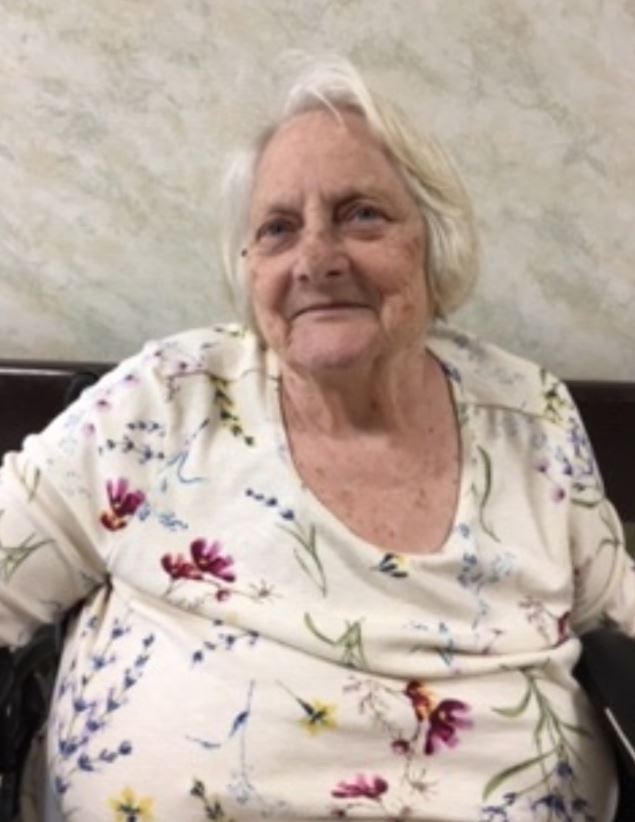
Ms. Charlotte Page came to Boyd Nursing and Rehab Center with the diagnosis of L4 Compression fracture. This diagnosis made it impossible for her to walk without severe fear and pain.
With the help of both nursing and therapy Care Team Members, she has improved tremendously! Charlotte can now ambulate greater than 200ft with the use of a front wheel walker with standby assistance of staff and is transferring to the chair or wheelchair with only assistance of one. She is no longer afraid to participate in therapy and makes daily strides to regain her previous level of functioning. Charlotte is determined and dedicated to her recovery. We are so proud of her and celebrate her successes!

Traveling & Covid-19

August 14, 2020
If you are traveling, help stop the spread of COVID-19 and other respiratory illnesses by following these steps. 

Youth Sports & Covid-19

August 7, 2020
https://www.youtube.com/watch?v=LMBzjaVRChY
As we try moving toward a new normal, Summer sports are starting back up. Here are some tips and recommendations to keep you and your players safe during the Covid-19 Pandemic.

Food & Covid-19

July 24, 2020

Currently, there is no evidence to suggest that handling food or consuming food is associated with COVID-19.

Coronaviruses, like the one that causes COVID-19, are thought to spread mostly person-to-person through respiratory droplets when someone coughs, sneezes, or talks. It is possible that a person can get COVID-19 by touching a surface or object, including food or food packaging, that has the virus on it and then touching their own mouth, nose, or possibly their eyes. However, this is not thought to be the main way the virus spreads.

After shopping, handling food packages, or before preparing or eating food, it is important to always wash your hands with soap and water for at least 20 seconds. If soap and water are not available, use a hand sanitizer that contains at least 60% alcohol. Cover all surfaces of your hands and rub them together until they feel dry. Remember, it is always important to follow good food safety practices to reduce the risk of illness from common foodborne pathogens.


Content Source: The Center for Disease Control and Prevention